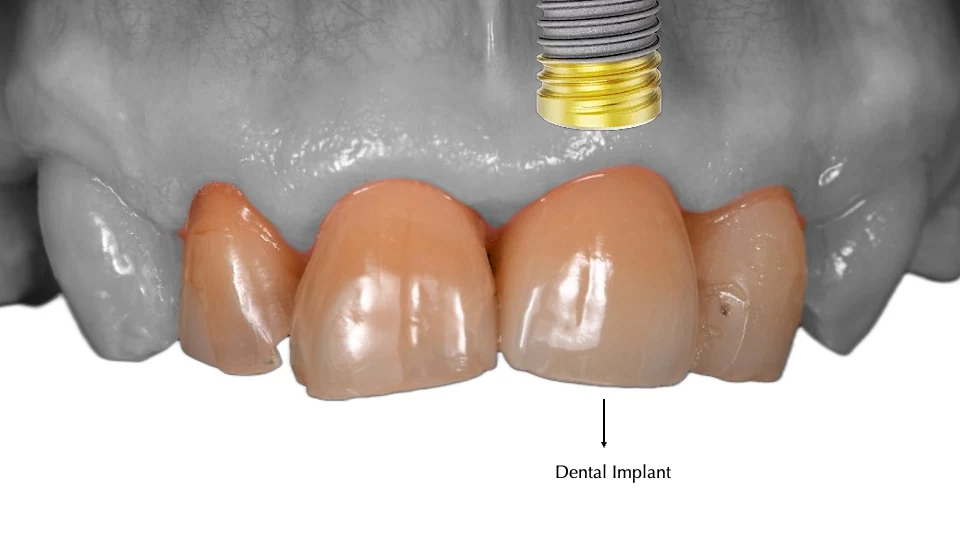
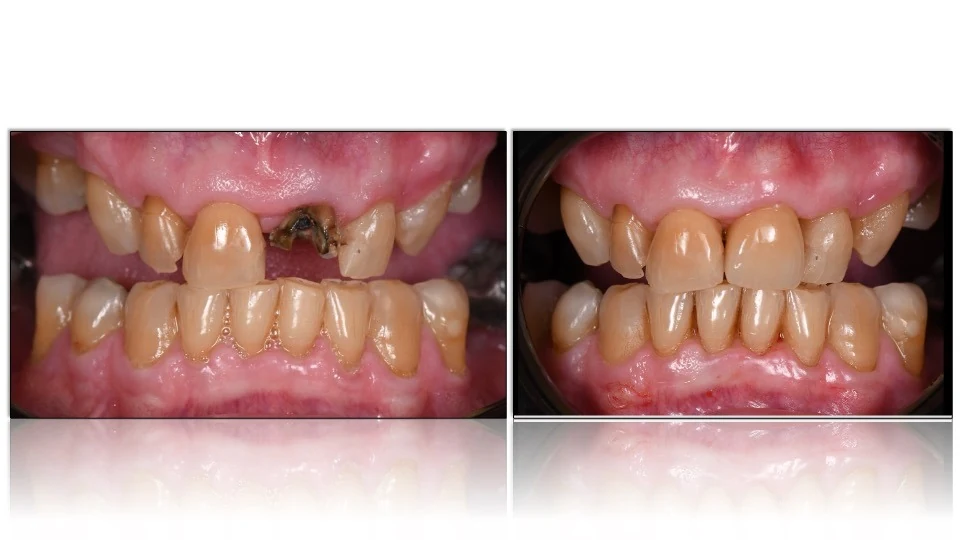
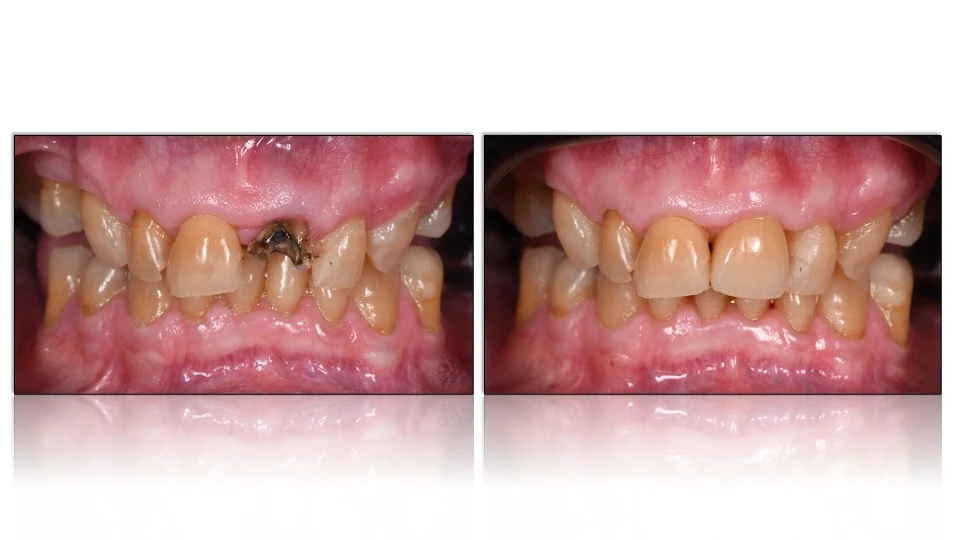
A severely damaged tooth in a highly visible area
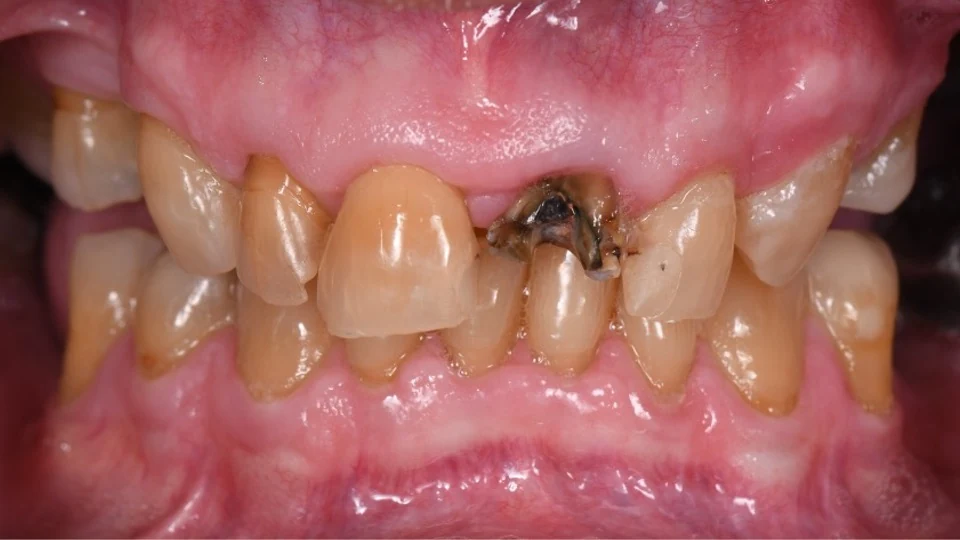
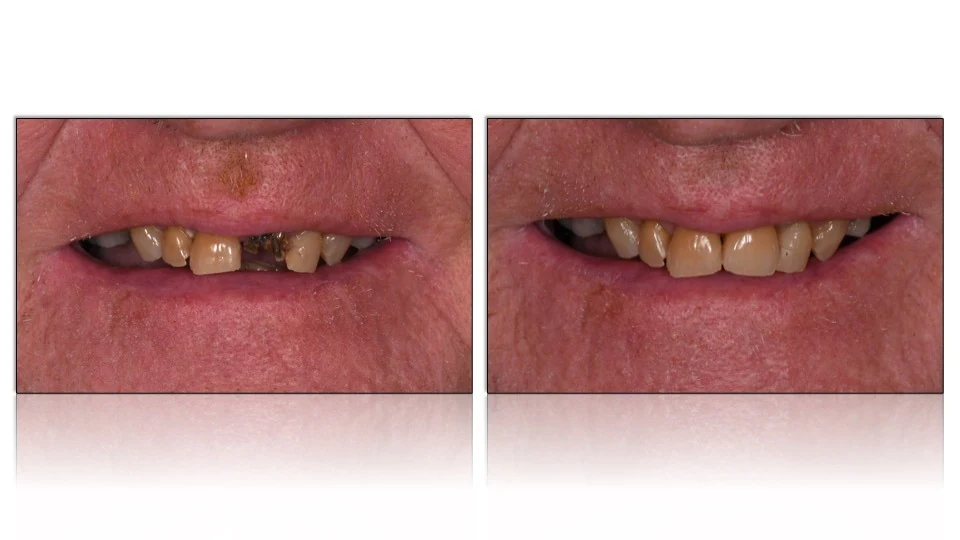
The patient presented with an extensively damaged upper front tooth. Because this tooth sits in the centre of the smile, the treatment needed to address much more than simply filling the space.
The priorities were to provide a fixed replacement, preserve the neighbouring teeth where possible, maintain the surrounding gum architecture and create a result that fitted naturally into the patient’s existing smile.
- Severely compromised front tooth
- Limited remaining tooth structure
- High aesthetic demand
- Need to maintain the surrounding gum contour
- Preference for a fixed tooth replacement
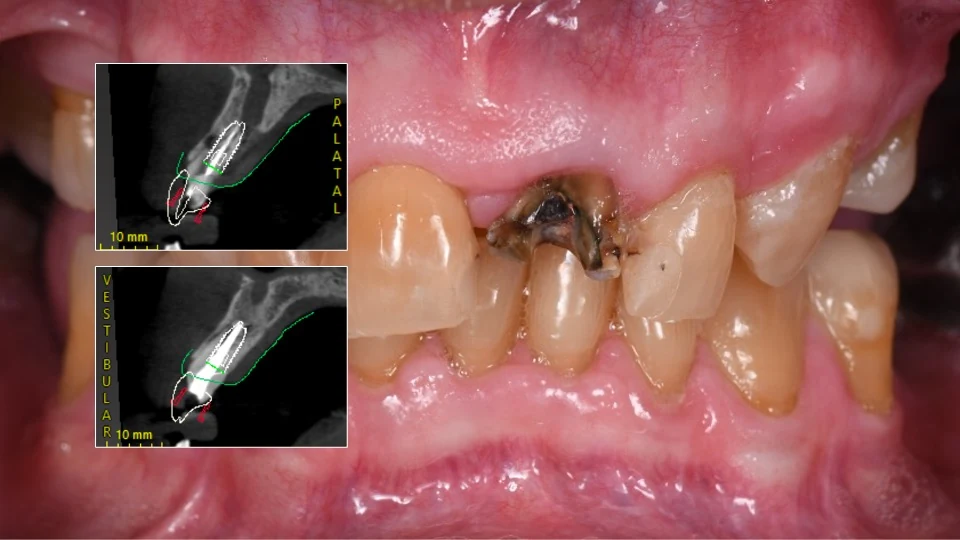
Planning the final tooth before placing the implant
Replacing a front tooth with an implant requires careful planning. The goal is not simply to place an implant wherever bone is available. The position of the future tooth needs to guide the implant position.
Planning considered the available bone, implant angulation, gum levels, neighbouring teeth, restorative space, bite and the shape of the future crown.
Tooth replacement in the same treatment phase
In this case, the damaged tooth was removed and an implant was placed as part of the same treatment phase. This is known as immediate implant placement.
Immediate implant treatment is not appropriate for every patient. The bone, gum tissue, infection status, implant stability and aesthetic requirements all need to be assessed before deciding whether this approach is suitable.
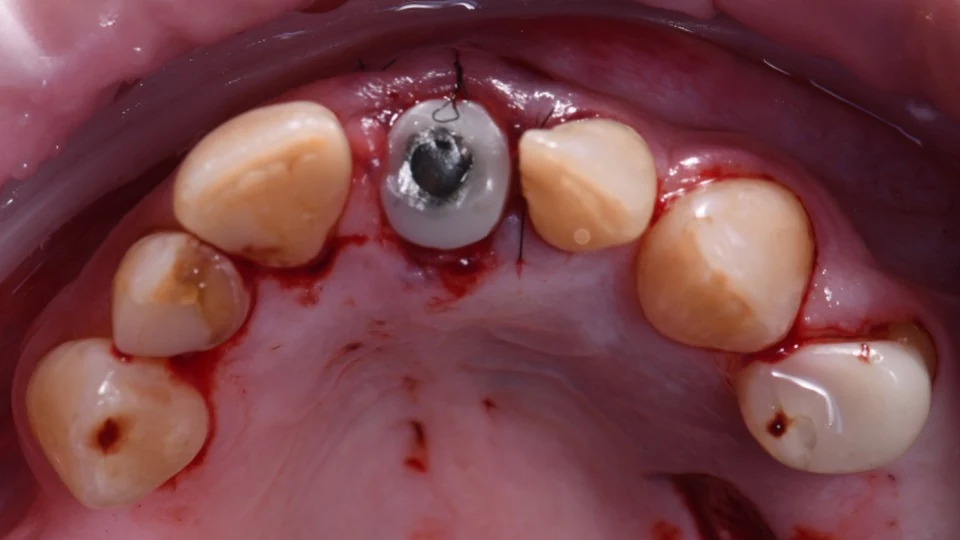
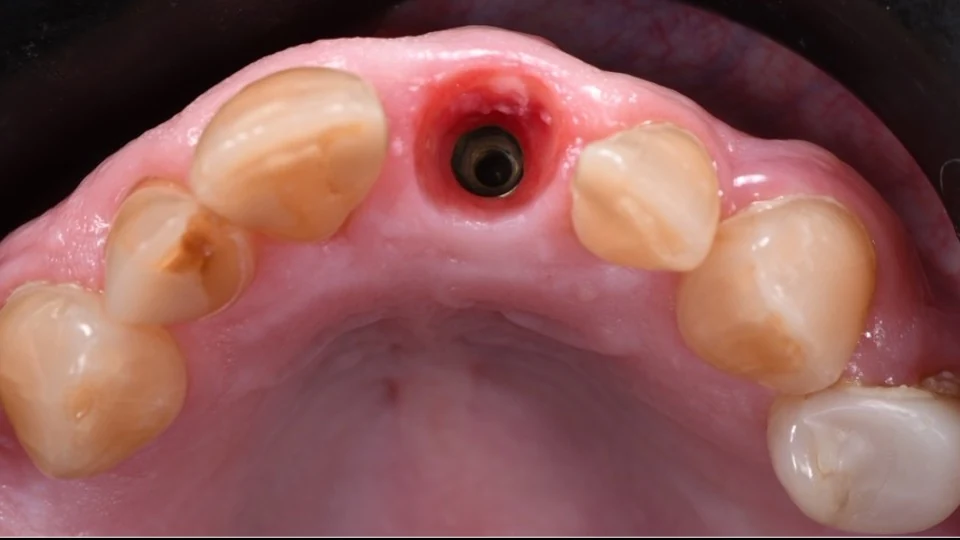
The gum around the implant matters as much as the crown
The implant itself sits beneath the gum. What the patient ultimately sees is the crown and the soft tissue surrounding it.
A provisional restoration can help support and shape the gum during healing so the final crown appears to emerge naturally from the tissue rather than simply sitting on top of it.
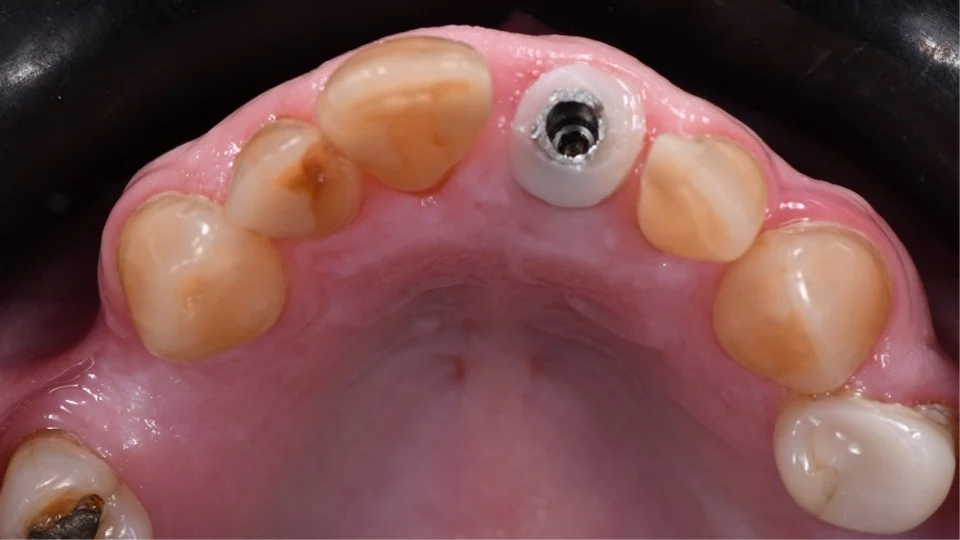
A healed emergence profile for the final tooth
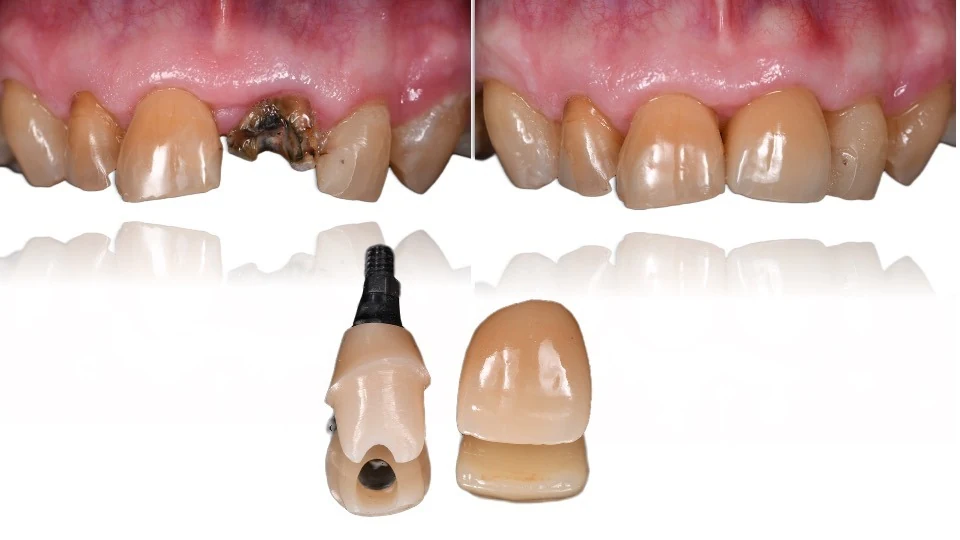
After healing, the surrounding gum developed a defined contour around the implant. This soft-tissue architecture is an important part of achieving a natural-looking result in the front of the mouth.
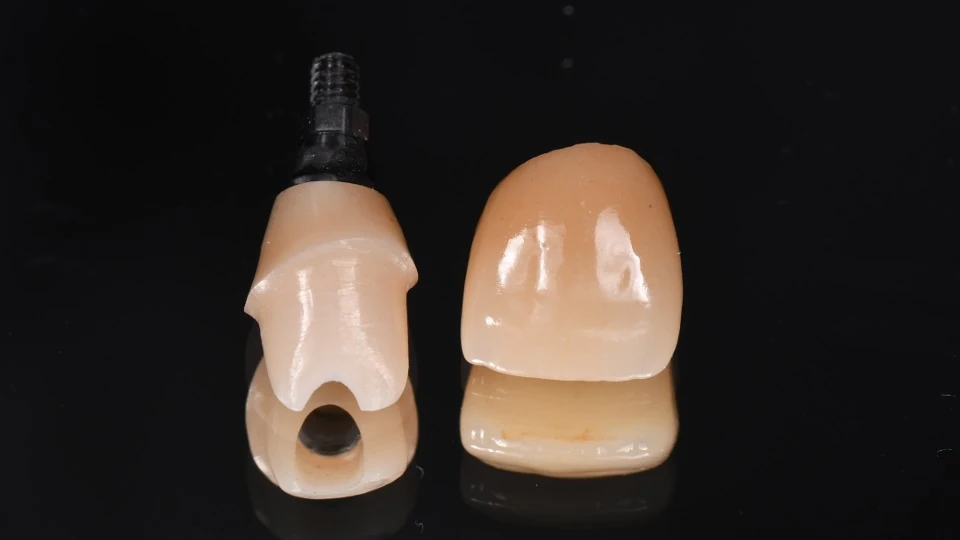
Designing the implant crown to blend with the smile
Once the implant and surrounding tissues were ready, the definitive restoration was fabricated.
For a front tooth, the crown must work with the neighbouring teeth in terms of shape, width, length, colour, surface character and the way it meets the gum.
The objective is not simply to make a replacement tooth. It is to make the replacement sit comfortably within the patient’s existing smile.
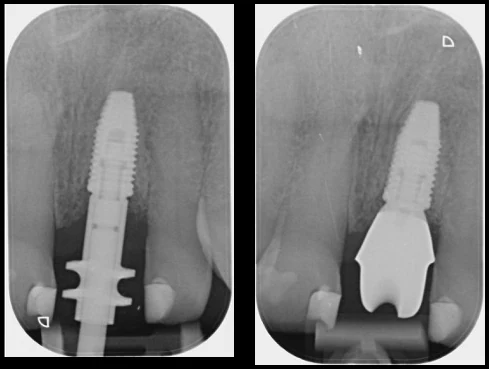
Restoration and implant position checked radiographically
Radiographs form part of the assessment and restorative process, helping confirm the relationship between the implant, restorative components and surrounding structures.
A fixed replacement while preserving the neighbouring teeth
The final implant-supported crown replaced the severely damaged front tooth while avoiding preparation of the adjacent teeth for a conventional bridge.
The treatment was planned around the implant position, soft-tissue contour and final crown so these elements worked together as one restoration.
A damaged front tooth does not automatically mean the neighbouring teeth need to be cut down
In suitable situations, a dental implant can provide a fixed replacement while preserving the adjacent natural teeth. However, immediate implant treatment is not appropriate for everyone.
The condition of the bone, gum tissue, bite, neighbouring teeth and aesthetic requirements all need to be assessed before deciding on the treatment approach.
Have you been told that a front tooth cannot be saved?
Depending on the individual situation, replacement options may include a resin-bonded bridge, conventional bridge or dental implant. A prosthodontic assessment can help you understand the options before deciding on treatment.
Use the arrows to move through the before-and-after views.
Clinical outcomes vary between patients. The treatment shown is specific to this individual case and should not be taken as a guarantee of a particular result.